
Market Overview: A Sudden Shift in Momentum
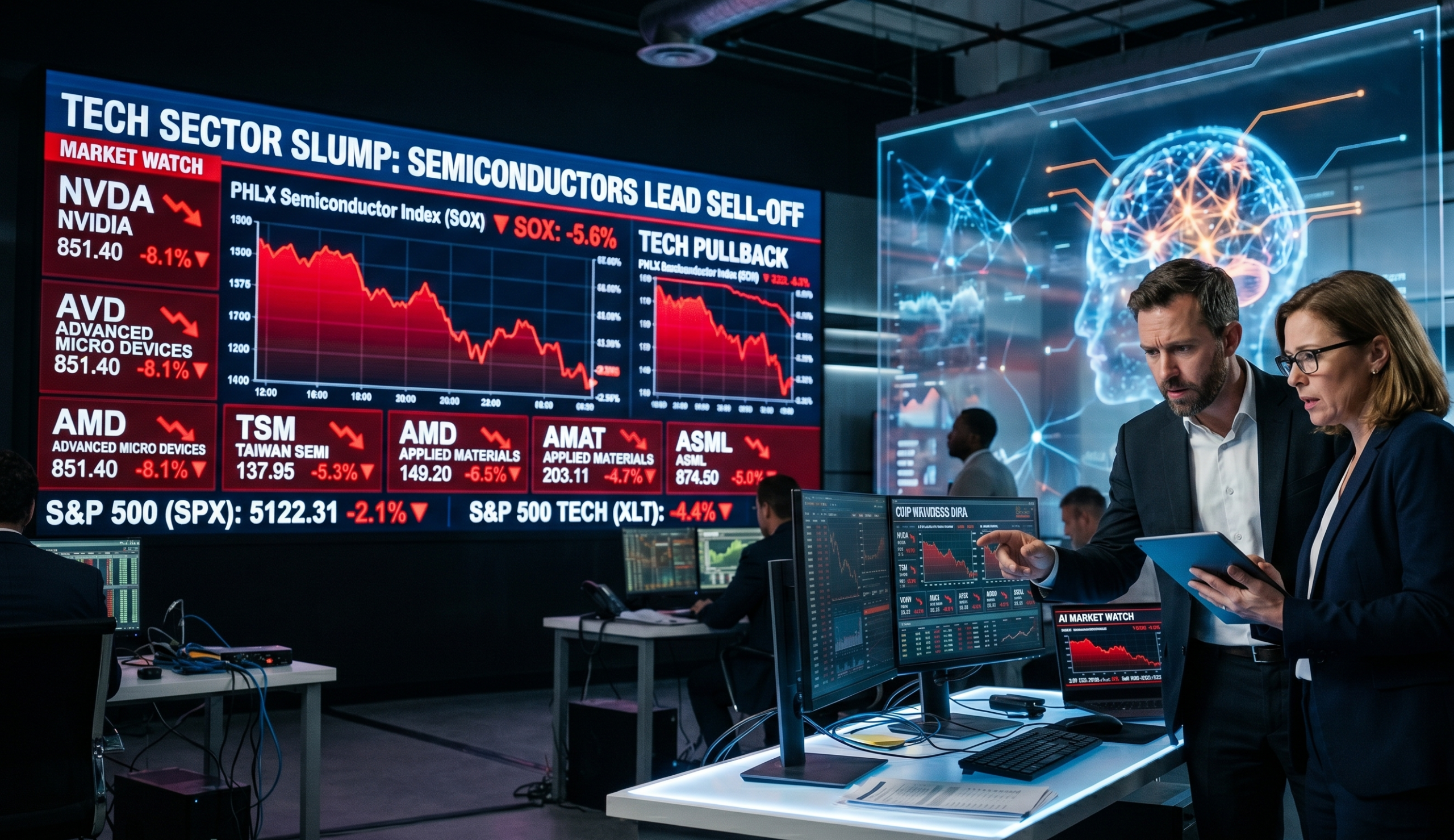
The S&P 500 slipped from its record highs on Thursday as a surprising report from OpenAI sent shockwaves through the semiconductor sector, dragging down the tech-heavy Nasdaq Composite. What began as another promising day for equities quickly turned cautious as investors reassessed their positions in chip stocks, which have been among the market’s strongest performers throughout 2024.
The broader market pullback serves as a reminder of how sensitive today’s equity landscape remains to developments in the artificial intelligence space. With AI-related stocks driving much of the year’s gains, any news that challenges the prevailing narrative can trigger swift repositioning across portfolios.
What the OpenAI Report Revealed
The catalyst for Thursday’s decline came from reports suggesting that OpenAI is exploring the development of its own custom AI chips. This strategic move, if realized, could reduce the company’s dependence on established semiconductor giants like Nvidia, AMD, and other chip manufacturers that have benefited enormously from the AI boom.
For investors, this news raised immediate concerns about the sustainability of the premium valuations that chip stocks currently command. Nvidia, which has become synonymous with AI computing power, saw its shares retreat as traders contemplated a future where major AI companies might vertically integrate their hardware needs rather than relying on third-party suppliers.
The semiconductor index experienced notable pressure throughout the trading session, with several major names posting significant losses. This sector rotation highlighted the fragile nature of momentum-driven trades and the importance of diversification in uncertain markets.
Broader Market Implications
The S&P 500’s retreat from record territory, while concerning in the short term, provides important context for understanding current market dynamics. The index had been riding a wave of optimism fueled by cooling inflation data, expectations of Federal Reserve rate cuts, and continued enthusiasm for artificial intelligence investments.
However, Thursday’s action demonstrated that even the strongest bull markets face periodic reality checks. The Nasdaq Composite, heavily weighted toward technology names, felt the brunt of the selling pressure as investors locked in profits on positions that had delivered substantial returns over recent months.
Market analysts noted that such pullbacks are healthy and normal within the context of longer-term uptrends. Corrections often shake out weak hands and create opportunities for patient investors to establish positions at more attractive entry points.
The AI Investment Landscape Evolves
OpenAI’s potential foray into chip manufacturing reflects a broader trend among technology giants seeking greater control over their supply chains. Companies like Apple, Google, and Amazon have all invested heavily in developing proprietary silicon solutions, recognizing the strategic advantages of custom hardware optimized for their specific workloads.
For the semiconductor industry, this evolution presents both challenges and opportunities. While established players may face increased competition from well-funded tech companies, the overall demand for advanced chips continues to grow exponentially. Data centers, autonomous vehicles, robotics, and countless other applications require ever-more-powerful processing capabilities.
Investors should recognize that the AI revolution extends far beyond any single company or product category. The transformation of industries through machine learning and generative AI will require massive infrastructure investments over the coming decade, benefiting a wide range of participants across the technology ecosystem.
What Investors Should Watch
Looking ahead, market participants will be closely monitoring several key factors that could influence the trajectory of both chip stocks and the broader indices. Earnings reports from major technology companies will provide crucial insights into actual demand trends versus speculative projections.
Additionally, any clarification from OpenAI regarding its chip development timeline and strategy could help stabilize sentiment in the semiconductor space. Markets often overreact to initial headlines before finding equilibrium as more details emerge.
The Federal Reserve’s upcoming policy decisions also remain top of mind for investors. Interest rate expectations continue to drive asset allocation decisions, and any shifts in the central bank’s stance could overshadow sector-specific concerns.
Maintaining Perspective During Volatility
For long-term investors, days like Thursday serve as valuable reminders about the importance of maintaining disciplined investment strategies. While short-term volatility can be unsettling, historical data consistently shows that patient investors who stay the course through market fluctuations tend to achieve better outcomes than those who attempt to time their entries and exits.
The fundamental drivers of economic growth and corporate profitability remain intact, even as individual sectors experience temporary setbacks. Diversified portfolios that balance exposure across multiple industries and asset classes provide the best protection against unexpected developments while still participating in long-term wealth creation.
As markets digest this latest development, investors would be wise to focus on their individual financial goals rather than reacting emotionally to daily market movements. The AI revolution continues unabated, and opportunities will emerge for those prepared to act thoughtfully when others panic.