
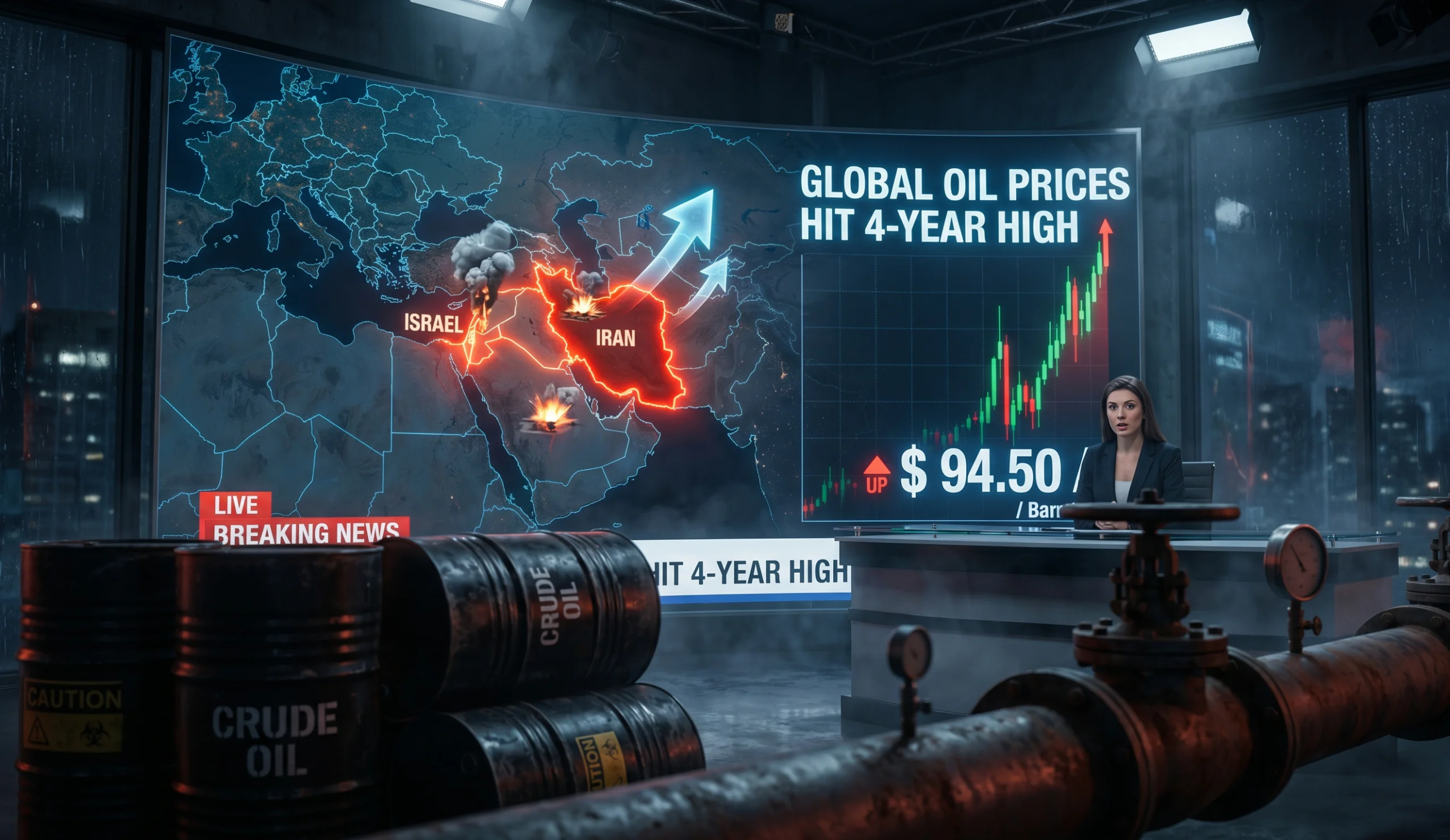
Global Markets React as Middle East Crisis Intensifies
Oil prices have surged to their highest levels in four years as the escalating conflict between Iran and Israel sends shockwaves through global energy markets. The dramatic price spike comes amid growing concerns about potential disruptions to crude oil supplies from one of the world’s most strategically important regions, leaving economists and policymakers scrambling to assess the broader implications for the global economy.
Brent crude futures jumped significantly in early trading, with prices reaching levels not seen since 2020. West Texas Intermediate (WTI) crude followed a similar trajectory, as traders and investors responded to the heightened geopolitical uncertainty with increased buying activity. The surge reflects deep-seated fears that the conflict could spread further across the Middle East, potentially threatening critical oil infrastructure and shipping routes.
Understanding the Geopolitical Catalyst
The current crisis represents a dangerous escalation in the long-standing tensions between Iran and Israel. Recent military exchanges have raised alarm bells across international diplomatic circles, with world leaders calling for restraint while simultaneously preparing for various contingency scenarios. The situation remains highly fluid, with developments occurring rapidly and unpredictably.
Iran, as a major oil-producing nation and a key member of OPEC, holds significant influence over global energy supplies. Any disruption to Iranian oil exports or, more critically, any threat to the Strait of Hormuz—through which approximately 20% of the world’s oil passes daily—could have catastrophic consequences for global energy security. Market analysts are closely monitoring these developments, recognizing that the stakes extend far beyond regional politics.
Economic Ripple Effects Spread Globally
The implications of rising oil prices extend well beyond the energy sector. Consumers worldwide are likely to feel the impact at gas stations in the coming weeks, as higher crude prices inevitably translate into increased fuel costs. For businesses, particularly those in transportation, manufacturing, and logistics, the surge represents an unwelcome addition to already challenging operating conditions.
Economists warn that sustained high oil prices could reignite inflationary pressures that central banks have worked diligently to contain over the past two years. This presents a particularly challenging scenario for monetary policymakers, who must balance the need to control inflation against the risk of triggering economic slowdowns through aggressive interest rate policies.
Hegseth Faces Congressional Scrutiny
Meanwhile, in Washington, Defense Secretary Pete Hegseth is preparing to face a fresh round of questioning from lawmakers regarding the administration’s response to the Middle East crisis. The upcoming congressional sessions are expected to focus on military preparedness, diplomatic strategies, and contingency plans should the situation deteriorate further.
Hegseth’s testimony comes at a critical juncture, as legislators seek clarity on the administration’s approach to managing the complex web of alliances and adversarial relationships that define Middle Eastern geopolitics. Questions are expected to cover topics ranging from the protection of American assets in the region to the potential deployment of additional military resources.
Market Outlook and Expert Analysis
Financial analysts and energy experts remain divided on the trajectory of oil prices in the near term. Some suggest that prices could climb even higher if the conflict shows no signs of de-escalation, with predictions of triple-digit oil prices becoming increasingly common in market commentary. Others point to factors that could moderate the surge, including potential diplomatic interventions and the capacity of other oil-producing nations to increase output.
The International Energy Agency has indicated it is closely monitoring the situation and stands ready to coordinate emergency measures if necessary. Strategic petroleum reserves held by major consuming nations represent one tool that could be deployed to stabilize markets, though experts caution that such measures provide only temporary relief.
Looking Ahead: Uncertainty Dominates
As the situation continues to evolve, businesses, governments, and consumers alike face a period of considerable uncertainty. The interconnected nature of the global economy means that events in the Middle East have immediate and tangible consequences for communities thousands of miles away.
Energy security has once again moved to the forefront of policy discussions, with renewed calls for accelerating transitions to renewable energy sources and reducing dependence on volatile fossil fuel markets. For now, however, the world remains heavily reliant on oil, and the events unfolding in the Middle East serve as a stark reminder of the fragility of global energy systems.
Stay tuned to Time24Seven for continued coverage of this developing story as we track the latest updates on oil prices, diplomatic efforts, and the broader implications of the Iran-Israel conflict.