
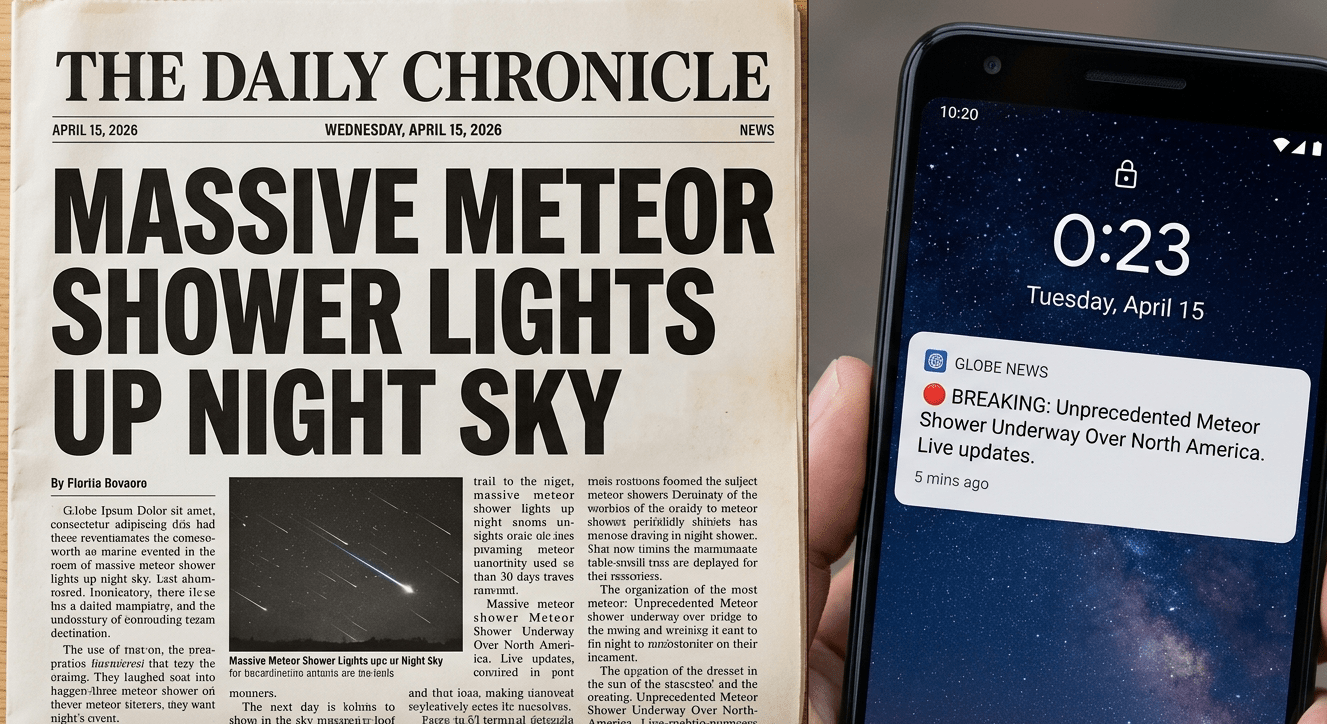
There was a time when a major world event would dominate headlines for a week. Now, a geopolitical crisis can trend globally, spark debate, and be forgotten — all within 72 hours. This isn’t an accident. It’s the architecture of modern media, and understanding it changes how you consume news entirely.
What Exactly Is a News Cycle, and Why Does It Matter?
A news cycle is the window of time a story receives active media attention before being displaced by the next event. It matters because it determines what the public understands, what politicians respond to, and what history remembers. In 2026, that window has narrowed to hours for most stories — not days.
The compression isn’t random. It’s driven by algorithmic publishing, 24/7 broadcast competition, and social media platforms that reward novelty over depth. Reuters Institute’s 2025 Digital News Report found that the average lifespan of a trending news story on social platforms is now under 18 hours — down from 3.2 days in 2015.
How Did Social Media Collapse the Traditional News Timeline?
Social media didn’t just accelerate news — it fundamentally rewired editorial priorities. Platforms like X (formerly Twitter) and YouTube treat engagement velocity as a ranking signal. A story that generates 10,000 comments in one hour outperforms a nuanced investigative piece published the same day.
This creates a feedback loop. Newsrooms publish faster to stay relevant. Faster publishing means less verification. Less verification erodes trust. And eroded trust pushes audiences toward partisan sources that confirm existing beliefs rather than challenge them. The result? Coverage that is loud, brief, and emotionally charged — built for scrolling, not understanding.
Is the Speed of News Making Us Less Informed?
Yes — but the relationship is more complex than it seems. Speed alone isn’t the problem. The problem is depth displacement: when volume replaces analysis, audiences absorb fragments instead of context. A 2024 study by the Reuters Institute found that 46% of news consumers in the UK actively avoid news because they find it overwhelming — a phenomenon researchers now call ‘news fatigue.’
But here’s what most media critics miss. Audiences aren’t passive victims. They’re adapting — turning to newsletters, long-form podcasts, and independent analysts who offer the context that shrinking cycles can’t.
What Does a Shorter News Cycle Mean for Global Events?
When the news cycle shrinks, it distorts the weight of global events. A famine unfolding over months gets one peak news day. A celebrity scandal lasting 48 hours receives more cumulative coverage. During the 2025 Sudan humanitarian crisis, media coverage peaked for exactly four days before being displaced by a domestic political story in the United States. Aid organizations reported donation drops of 62% in the week following that displacement, according to a report from OCHA.
How Can You Stay Genuinely Informed in a Fast-Moving World?
Resilient news consumers in 2026 follow a simple framework: they separate breaking from understanding. Breaking news tells you what happened. Analysis tells you why it matters. They subscribe to slow journalism sources that spend weeks on a single story. They create reading rituals — 20 minutes each morning to curated summaries, protecting mental bandwidth for the rest of the day.
Why Does This Matter for Businesses and Public Figures?
For brands and public figures, the compressed news cycle creates both opportunity and risk. A corporate crisis that once required weeks of damage control now demands a response within hours — or the narrative writes itself. Brands that understand news cycles don’t just react — they anticipate.
FAQs
Q: What is the average length of a news cycle in 2026?
A: Most trending stories now receive active coverage for 12 to 36 hours on digital platforms, compared to 3–5 days in traditional media eras.
Q: Why are news cycles getting shorter?
A: Platform algorithms reward novelty and engagement velocity, pushing publishers to prioritize speed over depth — which accelerates the displacement of older stories.
Q: How can I avoid news fatigue?
A: Curate your sources, separate breaking news from analysis, and set intentional reading windows instead of passive scrolling.
Q: Does a shorter news cycle affect democracy?
A: Research suggests it does — when policy stories receive brief coverage, public accountability decreases and voter issue awareness becomes shallower.