
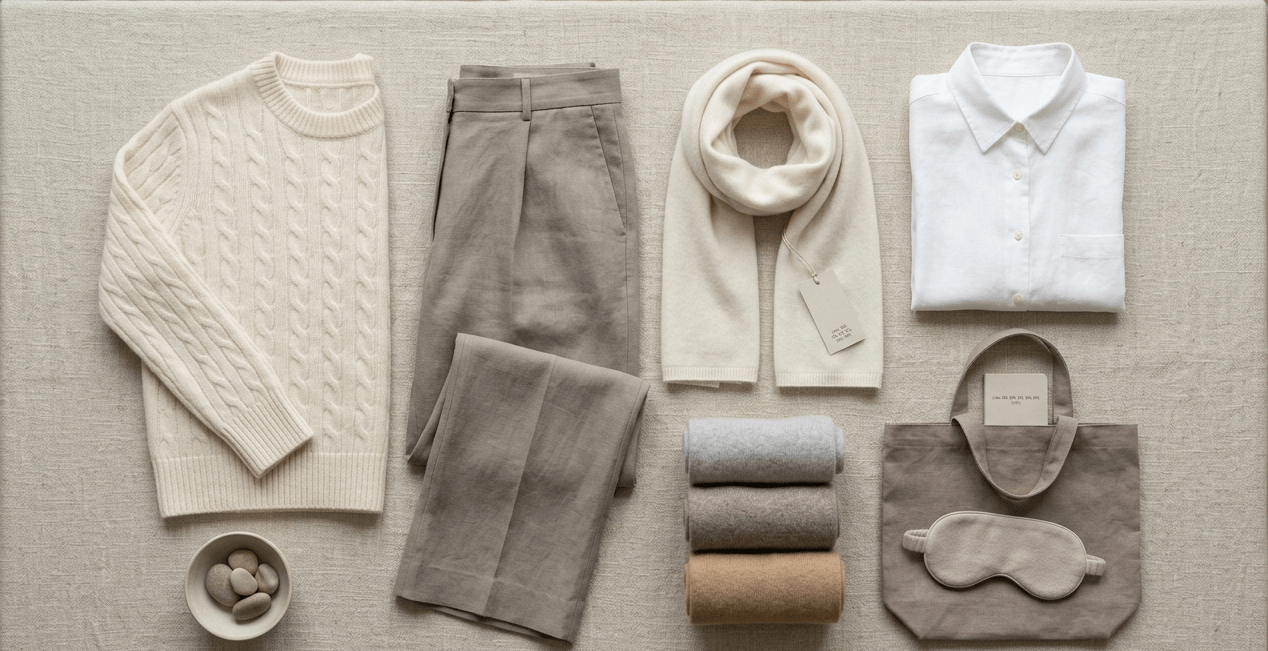
Somewhere between the end of logomania and the death of fast fashion maximalism, a quieter movement emerged. No logos. No declarations. Just exceptional quality, muted palettes, and the confidence of not needing anyone to read your brand. Silent luxury is not just an aesthetic — it is a cultural posture, and in 2026, it is defining how aspirational consumers dress, decorate, and signal identity.
What Exactly Is Silent Luxury and Where Did It Come From?
Silent luxury refers to a design philosophy that prioritizes material quality, precise tailoring, and restrained aesthetics over visible branding or trend-chasing. The garments speak through craftsmanship — not logos. The term gained mainstream traction through HBO’s Succession, where costume designer Michelle Crowe deliberately outfitted the Roy family in heritage brands like Loro Piana and Brunello Cucinelli — chosen specifically because most viewers would not recognize them. That invisibility was the point.
How Is Silent Luxury Different From General Minimalism?
Minimalism is a design principle about reduction. Silent luxury is a status signal — it is expensive, intentional, and aware of itself. A minimalist white T-shirt can cost $15. A silent luxury white T-shirt from Toteme or Lemaire costs $300–$600, constructed from fabric most people cannot identify but everyone can feel. It communicates that the wearer has both resources and the taste to not broadcast them — anti-ostentation as its own form of ostentation.
Which Brands Are Leading the Silent Luxury Movement?
Loro Piana, Brunello Cucinelli, The Row, Jil Sander, and Lemaire are the primary references at the luxury tier. Below that, brands like COS, Arket, and Quince have captured the aesthetic at accessible price points. The democratization of the aesthetic is precisely what makes it a genuine cultural trend rather than an elite niche.
Why Are Consumers Moving Toward Logo-Free Fashion in 2026?
The pandemic created space for reflection on consumption habits and the performative nature of visible branding. Gen Z — frequently mischaracterized as logo-obsessed — has shown significant preference for brand storytelling over brand display in 2025 McKinsey research. When everyone has access to fast fashion dupes of luxury logos, the logo itself loses exclusivity. Real exclusivity now lives in the quality of the material and the knowledge required to recognize it.
Is Silent Luxury Sustainable or Just Expensive Minimalism?
The sustainability case is nuanced. The emphasis on quality over quantity aligns with sustainable consumption — buying fewer, better items that last longer. Research from the Ellen MacArthur Foundation suggests doubling average clothing lifespan reduces fashion’s environmental impact by 44%. The complication is accessibility: true silent luxury requires disposable income most consumers don’t have. The aesthetic ideals are sound; the price points create implicit exclusion.
FAQs
Q: What is silent luxury in fashion?
A: Silent luxury is a style philosophy emphasizing high material quality, restrained aesthetics, and minimal or no visible branding — signaling status through craftsmanship rather than logos.
Q: Which brands represent silent luxury?
A: Loro Piana, Brunello Cucinelli, The Row, Jil Sander, and Lemaire at the luxury tier. COS, Arket, and Quince represent accessible interpretations.
Q: Why is silent luxury trending in 2026?
A: Logo saturation, post-pandemic consumption reflection, Gen Z preference for substance over display, and social media oversaturation have driven consumers toward understated quality.
Q: Is silent luxury environmentally sustainable?
A: The buy-fewer-better philosophy aligns with sustainability goals, but high price points limit accessibility and constrain its broader cultural impact.
great