
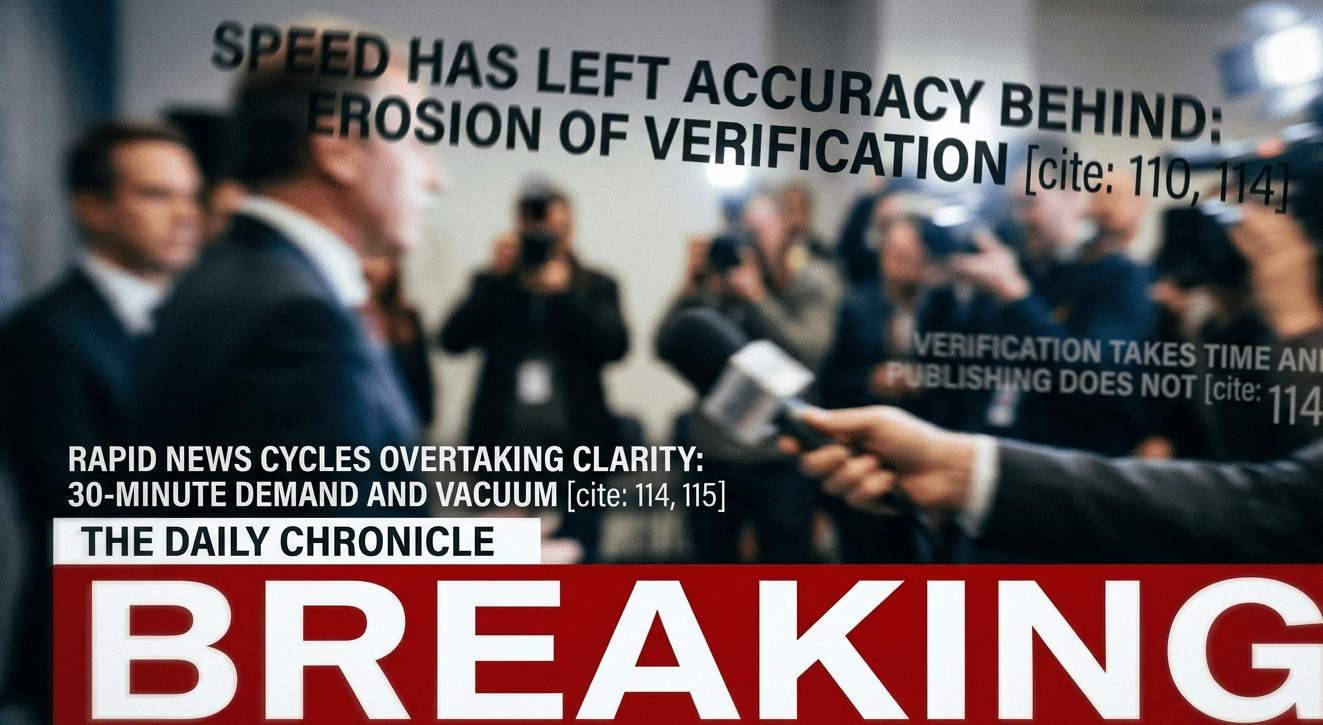
Speed is the currency of modern journalism. The outlet that publishes first gets the clicks. But in the race to publish first, something quietly gets left behind — accuracy. And once a false story spreads, correcting it requires ten times the effort of publishing it. That math is not working in the public’s favor.
Why Is Misinformation So Common in Breaking News Coverage?
Breaking news misinformation spreads because verification takes time and publishing does not. When an event occurs, the first 30 minutes produce massive audience demand and almost no confirmed facts. That vacuum gets filled, often by speculation presented as reporting. A 2023 study by MIT’s Media Lab found that false news spreads six times faster than accurate news on social platforms, and emotional stories spread fastest of all.
How Do Newsrooms Balance Speed and Accuracy?
The best newsrooms maintain a strict two-source rule for breaking stories — meaning no claim goes live without independent confirmation from at least two separate sources. Wire services like AP and Reuters remain the gold standard for early-stage accuracy precisely because they sacrifice speed for verification. The gap between wire standards and social media publishing speed is where most misinformation lives.
What Is the Real Cost of a False Breaking News Story?
In 2022, incorrect early reports about a nuclear incident caused financial markets to move significantly before corrections were issued. More quietly, cumulative exposure to misinformation increases general skepticism toward all news sources — including accurate ones. The more false stories circulate, the harder it becomes to trust the true ones.
How Can Readers Tell the Difference Between Breaking News and Speculation?
Reliable breaking news uses hedged language: ‘officials say,’ ‘preliminary reports suggest,’ ‘details are still emerging.’ Watch for source density — credible reports cite named or specifically described sources. Watch for emotional framing. And slow down before sharing. The 30-second pause before resharing a breaking story is the most effective individual misinformation filter that exists.
Does Social Media Have Any Responsibility for Breaking News Accuracy?
Platforms have implemented misinformation labels and fact-check partnerships, but the structural incentive — engagement — still rewards emotional, shareable content over accurate, dry reporting. Researchers at the Reuters Institute concluded in 2025 that platform misinformation policies reduced viral spread of labeled false content by roughly 15–20% — significant, until you account for the volume of content never labeled.
What Can You Do to Become a More Resilient News Consumer?
Resilient news consumers distinguish between the event and the interpretation. When a story breaks, they note it exists, then wait 24 hours before forming a strong opinion. In that window, corrections emerge, context appears, and the emotional charge subsides. They also cross-reference across ideological lines. Being a resilient news consumer is not cynicism. It is the highest form of media literacy.
FAQs
Q: Why does misinformation spread faster than accurate news?
A: Emotionally charged, novel content gets more engagement. Algorithms amplify engagement, so false stories often travel further and faster than corrections.
Q: What is the two-source rule in journalism?
A: A standard requiring any significant claim to be independently confirmed by at least two separate sources before publication.
Q: How long should I wait before trusting a breaking news story?
A: Waiting 24 hours allows time for corrections and added context. For major events, 48–72 hours produces significantly more accurate understanding.
Q: Are wire services like AP and Reuters more accurate during breaking news? A: Generally yes. Wire services prioritize verification over speed, making them more reliable for early-stage breaking news than social media sources.